The book offers an analysis of China's technological rise: deficit-driven improvisations.
Where printing paper, computers, and microchips have been in shortage, media improvisations and AI gadgetry have filled the gap and become the unlikeliest accelerants of tech imaginaries.
More about the book from the publisher’s page here.
Chinese Media Improvisations: Thriving on Deficits, Stanford University Press, 2026.
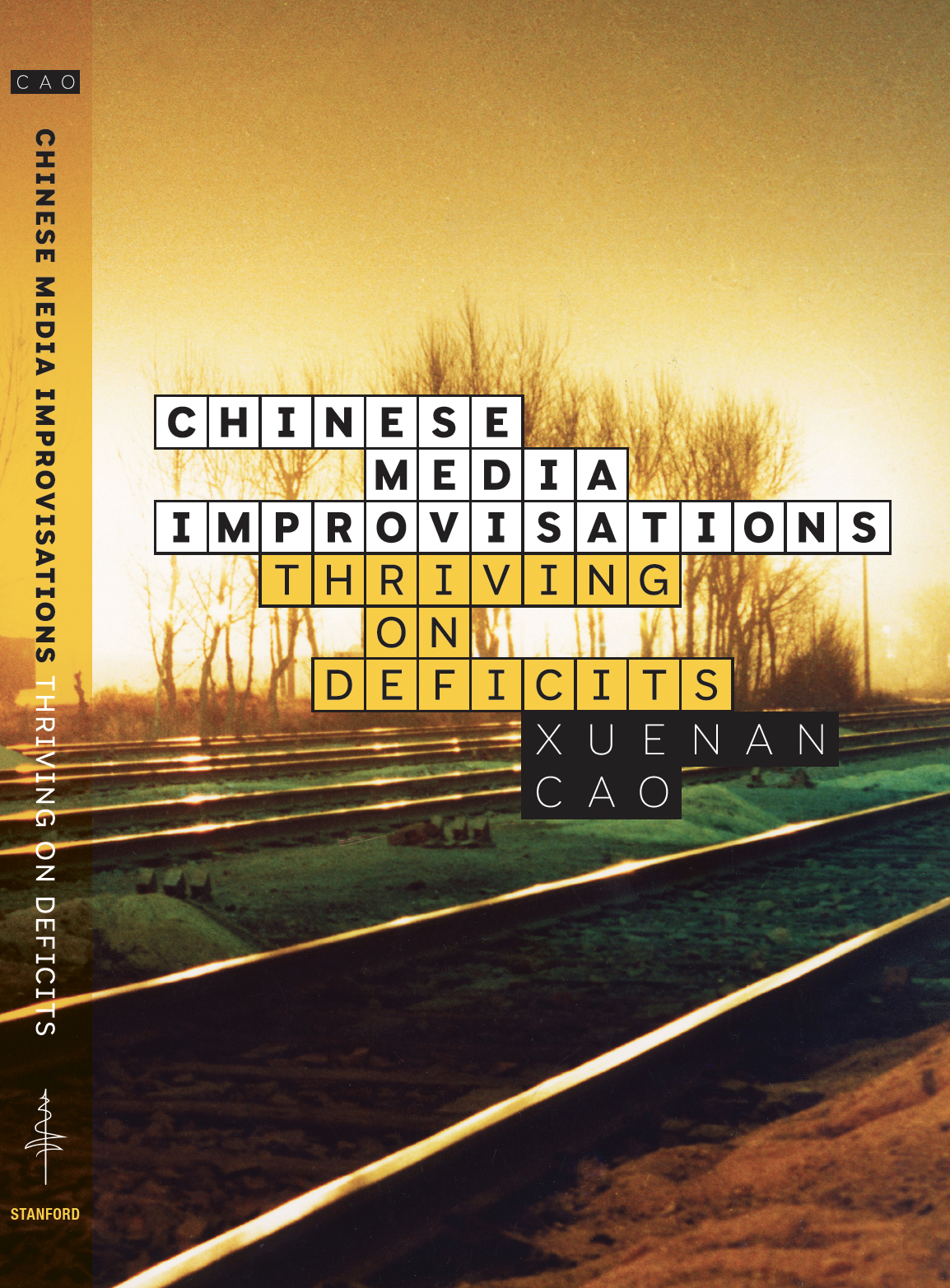
The book connects several moments in Chinese history: Mao's revolution that demanded the country produce mountains of books, notwithstanding the shortage of papers and printers; the compressed development that pushed key industries—such as China Railway—to informatize amidst hazards; the information-theoretical explosion in which scientists impersonated computing devices when there was none for them to access; and the ironic present, when municipals have scrambled to update their smart-cities with low-budget AI gadget theatrics, such as facial recognition toilet paper dispensers.
Cover photography by Cao Zuozhang, based on his 1980s photograph of China Railway Zhengzhou Station.
Each book section combines archival research and literary readings, narrated through personal history with media-theoretical extrapolation. Ultimately, the book argues that the critique and deconstruction of the canonicity of Western media theory requires an understanding of media improvisations in China.
To illustrate the evolving key research areas directly linked to the compressed development of IT and AI in China, I have also included insights from a data visualization project built from 22,000+ articles published between 1956 and 1990, downloaded from the Chinese research repository CNKI. The digital project can be accessed through the Chinese University of Hong Kong library’s website. It can be located with keyword phrase “prehistories of AI in China.” The animated bar charts on collected articles can be viewed below:
If you’re thinking about picking up Chinese Media Improvisations, please help support university press publishing. Instead of ordering through Amazon, you can order directly from Stanford University Press and receive 20% off with my author discount code.
For readers in the Americas: order from Stanford University Press at www.sup.org.
For readers outside the Americas: order from the Mare Nostrum Group–University Presses Bookshop at mngbookshop.co.uk.
The same 20% discount code works on both sites, and it does not expire. Buying directly from the publisher supports nonprofit academic publishing and helps university presses continue publishing specialized scholarship.