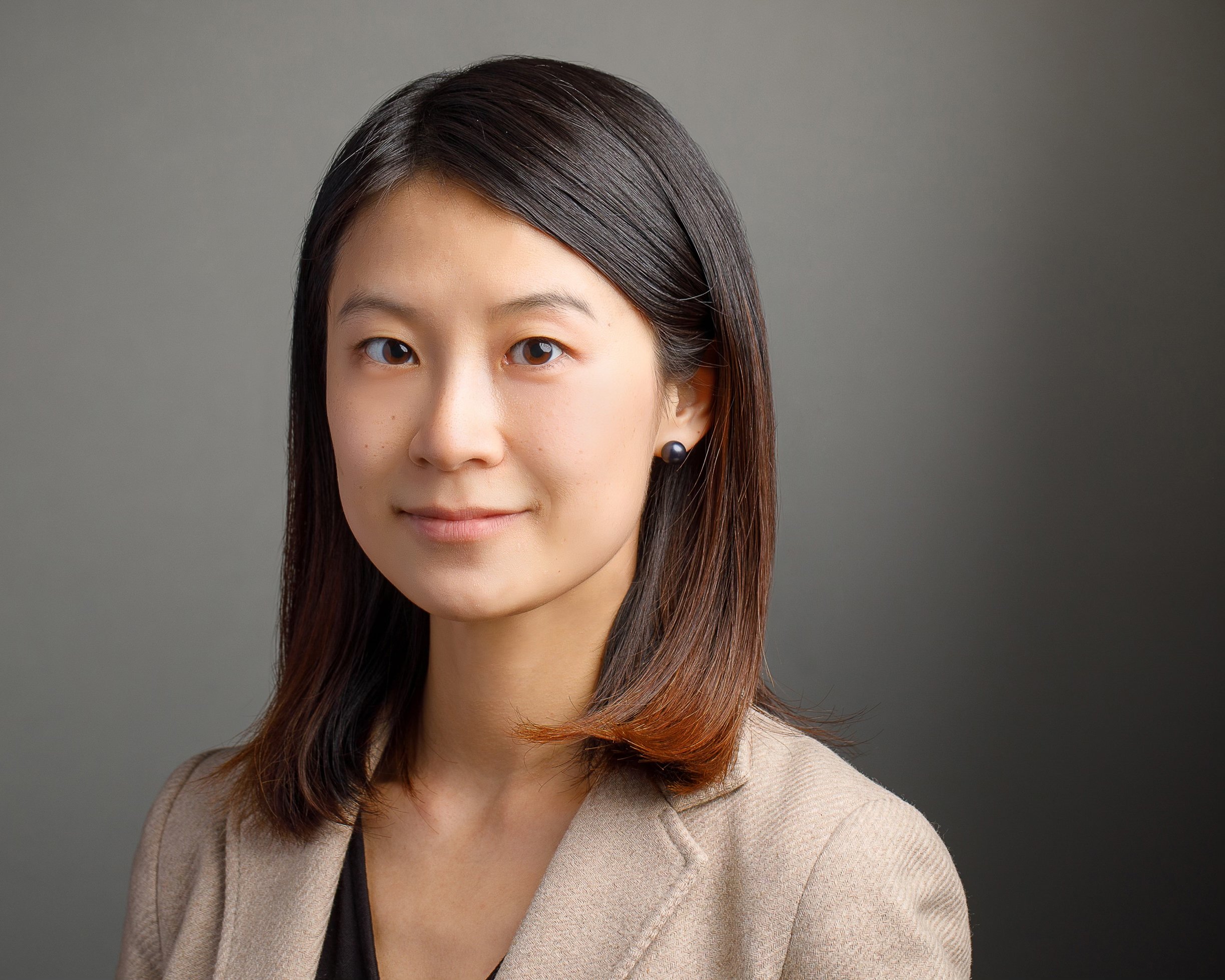
Hi, I am Xuenan.
I am a writer and scholar of technology and media. My world began in my mother's office at the Zhengzhou Railway College. Nowadays, Zhengzhou is a Chinese municipality of 20 million. Competition in everything is fierce. No one is special. I learned early that individual stories are often subsumed by systemic forces. My mother, a communications engineer and college teacher, has been my world, and her job—the extreme work of staying up all night to be on solo shift in her early twenties, charged with the responsibility of watching over a whole roomful of machines—was my model. I went to a Chinese style experimental school, where selected children were given advanced materials to see if they could figure out some ways to understand them. Often enough I started at the materials without understanding. The few who did would teach the rest. The sense of deficiency was what had driven most of us to successes.
From Zhengzhou, I went to Hong Kong (another place known for extreme work culture), and then to Czech Republic, and finally a PhD in Literature from Duke University. During my doctoral studies, I served as academic coach at Duke-Kunshan University for two years and taught hybrid courses during COVID at New York University-Shanghai. I was later appointed postdoctoral associate and lecturer at Yale University, then Assistant Professor at the Chinese University of Hong Kong, and now Chair of General Education at San Francisco Bay University (a small, private, rich, Silicon Valley-based university).
Here is an official bio:
Xuenan is Professor and Chair of General Education at San Francisco Bay University and Adjunct Faculty of Cultural Faculties at the Chinese University of Hong Kong, having previously taught at Duke University, New York University-Shanghai, and Yale University.She has published in Grey Room, boundary 2, Theory, Culture & Society, Big Data & Society, Information, Communication & Society, Media, Culture & Society, Extrapolations, as well as NeurIPS, TMLR, AMCIS, among others. She holds leadership roles focused on assessment and curricular change in the age of artificial intelligence.
Contact me at
xuenan[dot]cao[at]sfbu[dot]edu
or
xuenancao[at]cuhk[dot]edu[dot]hk
My research always starts with the condition that in almost all areas of our social and professional lives, we feel trapped by deficiencies. What happens when there aren’t enough resources? My book Chinese Media Improvisations traces a line from paper shortages to AI gadgetry, where deficiency fuels the technological rise in China.
My current book project about Palo Alto focuses on the most enduring cliches jamming our imaginations about Silicon Valley, all more or less, related to the idea of flow, like “traffic,” “cash,” and “Yoga.” The flow is what shows up on apps, news, and conversations at bakeries, but that is where “flow” leaves us and “jam” begins.
I am also leading multiple grants on LLM-based agentic AI. LLMs are known to be able to role play. An agent should know what its role is, what it does not do, and what it implies. Of these it is hardest to know the role implications, especially those that arise when agentic AIs interact with each other in multi-agent systems. A list of my publications in these areas can be found at my google scholar page.
My research is deeply connected to my teaching and academic service. I currently teach courses on AI Culture and Society and Digital Culture at CUHK, and serve on the Modern Language Association's national AI Task Force to help guide the future of research in my field. My previous academic home included NYU Shanghai and Yale University.
I am always interested in connecting with fellow researchers, writers, and organizations. If my work resonates with you, please don't hesitate to start a conversation.